FROM AI COMPUTING TO 800V DC WHY SST VALIDATION MUST COME FIRST
AI is driving data centers toward higher power density and 800V DC architectures. Solid-State Transformers (SSTs) are becoming a key technology connecting medium-voltage grids, DC buses, energy storage systems, and high-density loads. The commercialization of SSTs depends not only on devices and topologies, but also on whether the entire system can be validated in a stable, repeatable, and reliable manner.
AI Expansion Drives SST as a Core Technology in the Power Supply Chain
Generative AI, intelligent agents, and large-scale model training are accelerating the rapid expansion of computing infrastructure. According to the International Energy Agency (IEA), global data center electricity consumption is expected to approximately double by 2030 compared with 2024.
More importantly, AI rack power density and load fluctuations are increasing simultaneously. Traditional low-voltage, high-current power distribution is facing growing challenges in busbars, cables, thermal management, and space utilization.
Therefore, next-generation AI data centers are beginning to explore the transition from conventional AC power distribution toward ±400V and 800V high-voltage DC architectures. This evolution reduces intermediate power conversion stages and lowers transmission current and losses at the same power level.
In this architectural transformation, the Solid-State Transformer (SST) is one of the key enabling technologies.
Unlike a conventional line-frequency transformer with electronic components added, an SST integrates power semiconductors, high-frequency isolation, modular power conversion, and digital control into a controllable power electronic node.
It enables the connection between medium-voltage AC grids and 800V DC buses, while providing interfaces for energy storage, microgrids, and bidirectional power flow.
Its value extends beyond AI data centers, covering renewable energy integration, energy storage systems, high-power charging, and industrial DC distribution.
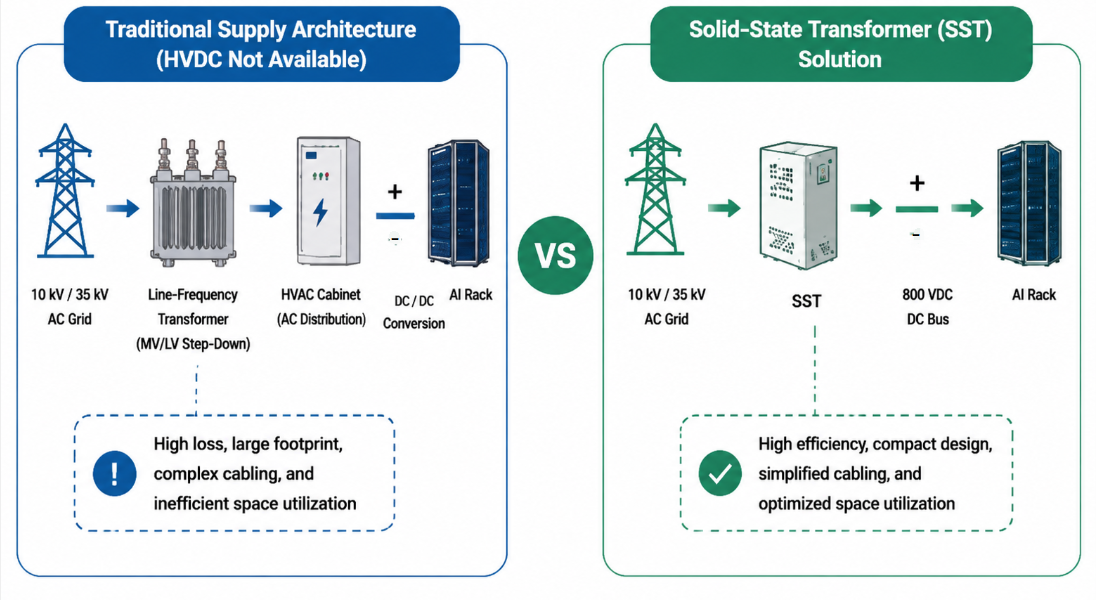
Figure 1. AI-Driven Transformation of Power Supply Architecture
From Prototype to Deployment: What Makes SST Testing Challenging?
As a complex power electronic system integrating AC/DC conversion, DC/DC conversion, and digital control, SST requires significantly more advanced validation than traditional line-frequency transformers.
SST Requires Transformer-Level High-Voltage and High-Power Validation Capability
SSTs are designed for medium-voltage grids and applications ranging from hundreds of kilowatts to megawatt levels.
Testing platforms must support different grid voltage levels worldwide. Laboratory validation cannot remain limited to low-voltage, low-power modules.
As voltage and power levels increase, challenges such as insulation coordination, device voltage stress, module voltage/current sharing, thermal management, control stability, and protection coordination become increasingly critical.
Therefore, the validation platform must provide high-voltage and high-power testing capability across both AC and DC domains.
Both AC and DC Sides Must Be “Controllable and Regenerative”
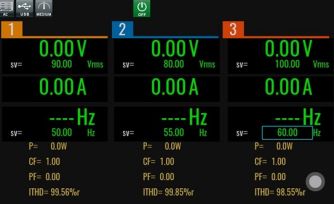
On the AC side, SST validation must cover voltage and frequency variations, three-phase imbalance, phase changes, harmonics, voltage dips, voltage swells, and recovery processes.
On the DC side, SSTs may interface with 800V DC buses, AI computing loads, or photovoltaic and energy storage systems.
Testing must cover source/load transitions, pre-charge processes, startup and shutdown sequences, dynamic loading, and energy regeneration.
Traditional unidirectional power supplies combined with resistive loads cannot reproduce these dual-port and bidirectional operating boundaries.
AI Dynamic Loads Bring Transient Response and Stability to the Forefront
AI training, inference, and workload scheduling introduce power fluctuations across different time scales.
Testing cannot focus only on rated-point efficiency. It must also evaluate DC bus overshoot and undershoot, recovery time, current limiting behavior, and control stability.
The AC input, internal DC link, and output bus are strongly coupled. A stable waveform at one port does not guarantee stable operation under real dynamic conditions.
Therefore, higher requirements are placed on dynamic performance testing at both module and system levels.
Modular Architectures Increase Challenges in Consistency, Protection, and Laboratory Energy Consumption
SSTs are typically constructed using multiple power modules connected in series or parallel.
Module variations, synchronization errors, voltage/current sharing, communication delays, and redundancy switching become increasingly significant as system power scales.
Meanwhile, hundreds of kilowatts to megawatt-level testing is also constrained by laboratory power infrastructure, thermal management, safety isolation, and operating costs.
Therefore, the validation platform must support scalability from modules to complete systems, while reducing long-term heat dissipation and energy consumption through regenerative energy recovery.
Advantages of ITECH SST Solid-State Transformer Testing Solutions
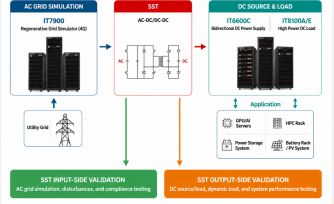
To address the multi-stage, multi-port, and bidirectional characteristics of SSTs, ITECH provides integrated AC and DC testing solutions covering both module-level and system-level validation requirements.
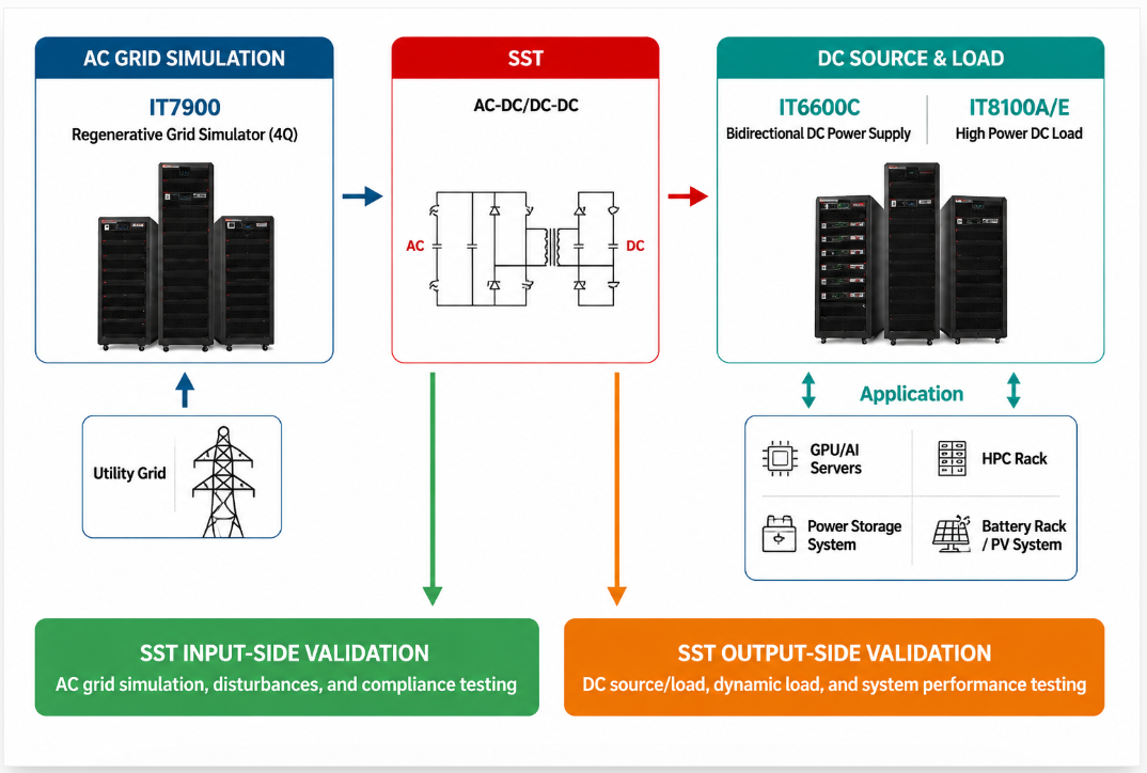
Figure 2. ITECH SST Solid-State Transformer Testing Solutions
IT7900 High-Performance AC Power Source: Building a Programmable Grid on the AC Side
The AC side can utilize the IT7900 high-performance regenerative grid simulator, with dedicated step-up transformers and safety interfaces configured according to the DUT voltage level.
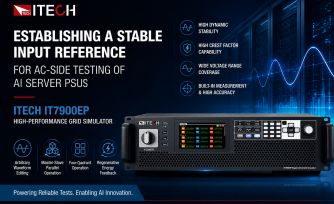
The IT7900E integrates a grid simulator, programmable AC/DC power source, and regenerative load into one platform.
It supports four-quadrant operation and multiple operating modes including AC, DC, AC+DC, and DC+AC.
The system supports LVRT, HVRT, voltage variation, and frequency disturbance testing.
Power capacity can be expanded through master-slave parallel operation, reaching more than 10 MVA+, making it suitable for applications ranging from power module testing to higher-power system platforms and enabling various grid compliance tests.
IT6600C Bidirectional DC Power Supply: Covering 800V DC Bus and Bidirectional Source/Load Operation
For the DC side, the IT6600C bidirectional programmable DC power supply is recommended.
Its 3U chassis delivers 42 kW high power density, with system power scalability up to 20 MW.
The IT6600C integrates both DC source and regenerative load capabilities, enabling simulation of high-voltage DC buses, dynamic loads, energy storage interfaces, and bidirectional converters connected to SST DC ports.
The product family covers voltage levels including 1200V, 1600V, and 2250V, with extensive application experience in renewable energy and high-voltage testing scenarios.
IT8100A/E High-Dynamic High-Power DC Electronic Load: AI Computing-Class Dynamic Testing Capability
When testing requirements move from bidirectional DC energy flow toward high-dynamic, high-power loading capability at the SST output side, the IT8100A/E high-speed high-power DC electronic load can be further configured.
The series supports a maximum current slew rate of 150 A/μs, a minimum response time of 8 μs, and scalable parallel expansion up to 4 MW through optical-fiber master-slave control.
It can simulate rapid power variations of AI servers and GPU loads during training, inference, and workload transitions.
This enables validation of SST DC output bus stability, dynamic recovery performance, current limiting protection, and continuous high-power output capability.
Combined with the IT6600C, which focuses on bidirectional source/load operation and energy storage interface simulation, the solution provides comprehensive SST DC-side validation from energy flow verification to AI computing-class dynamic load testing.
Building an Evolvable Validation Platform
During the module development stage, the key objective is to reproduce controllable AC input, DC ports, and dynamic operating conditions to identify efficiency, waveform behavior, control boundaries, and protection limits.
During multi-module integration, validation focuses on voltage/current sharing, synchronization, communication, fault isolation, and recovery.
At the complete system stage, real workload simulation, long-duration operation testing, and grid integration validation are further introduced.
ITECH has accumulated extensive experience in high-voltage DC systems and dynamic load testing for AI data centers, renewable energy grid integration, energy storage regeneration, and four-quadrant power electronics testing.
Facing SST as a convergence point of multiple technologies, the long-term value of a validation platform is not only to create a one-time environment for a single prototype, but to establish a reproducible, scalable, and traceable validation foundation.
Specific configurations should be evaluated according to the DUT topology, voltage level, power rating, port definition, and applicable standards.
Conclusion
AI is transforming power systems from supporting infrastructure into a critical foundation that directly impacts computing deployment efficiency.
SSTs, connecting medium-voltage grids, 800V DC systems, energy storage, and high-density loads, represent a key technology in this transformation.
With its extensive product portfolio and the combination of IT7900, IT6600C, and IT8100A/E, ITECH provides a scalable foundation for AC grid simulation, DC bidirectional source/load testing, and system-level validation.
This enables testing to become an integral part of topology selection, protection design, and engineering implementation at an earlier stage.
Learn more about ITECH’s full range of high-performance test solutions, visit:
Contact: info@itechate.com