Comparing Battery Cells with Confidence: Measurement accuracy and multi-channel testing with the ITECH IT2600
When two battery cells return different capacity results, how much of that difference comes from the cells themselves? Temperature, initial state of charge, electrical connections and cutoff settings can all influence the answer. More samples can strengthen the evidence, provided the test conditions allow meaningful comparisons. For development and quality teams, reliable measurements and consistent comparison conditions are complementary needs. Precision helps establish confidence in each result, while multi-channel operation allows more samples to be evaluated under a common test plan.
Measurement accuracy starts with the test conditions
Published standards provide a reference for defining test conditions. IEC 62660-1:2018, for example, specifies performance and life testing for lithium-ion cells used in electric road vehicles, including capacity and cycle-life evaluation. Defined procedures make results easier to interpret and compare.[1]
Capacity illustrates the point. It is calculated by integrating current over time, so current measurement error contributes directly to the result. Voltage measurement also matters because a voltage-based cutoff determines when charging or discharging ends. Two cells tested with different cutoff settings, or with different voltage drops in their connections, may appear to have different capacities even when the underlying cell behavior is similar.
DC internal resistance is estimated from the voltage change caused by a defined current step. For results to be comparable, measurement timing, temperature and state of charge must also be controlled. Measurement uncertainty should be small enough to distinguish the differences that matter.
These examples explain why resolution and accuracy need to be considered separately. Resolution describes the smallest increment an instrument can set or report. An accuracy specification defines the instrument's error limits under stated conditions. A finer display increment alone does not establish a more accurate capacity or resistance result.
More channels make controlled comparisons practical
Once the measurement method is defined, the next challenge is applying it consistently across samples. Sequential testing can introduce time-related differences if ambient conditions, fixture temperature or sample preparation change between runs. Parallel testing can help reduce the separation in time between measurements, while increasing the number of samples that can be evaluated during a test period.
Running cells at the same time does not, by itself, make the results comparable. Initial state of charge, temperature, rest periods, connection quality and cutoff criteria still need consistent treatment. Channel-to-channel measurement differences also need to be understood when the expected differences between cells are small.
Timing should match the behavior being studied. Pulse measurements require a defined sampling time relative to the current transition. Cycling comparisons may instead use elapsed time, cycle number or accumulated charge as their reference.
ITECH's approach is to select measurement ranges, channels and recording conditions around the comparison the engineer needs to make. The required accuracy follows from the size of the difference that matters to the decision.
Applying the IT2600 to cell testing
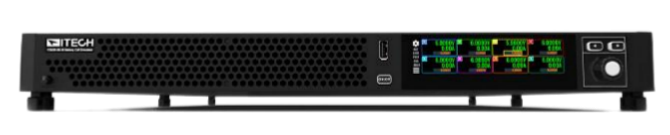
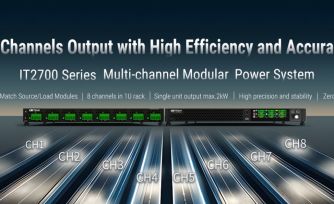
The ITECH IT2600 Multi-channel Cell Simulator & Tester brings eight isolated, independently programmable channels into a 1U instrument. For real-cell testing, it supports basic charge and discharge tests, cycling, and capacity and energy calculations. The series covers 0-6 V per channel, with model-dependent current ratings of ±1 A, ±3 A or ±5 A. These ratings help engineers determine which cells and test currents fit the platform. [2]
The platform offers voltage accuracy specified as fine as 1 mV, with 0.1 mV voltage setting and readback resolution. Current readback resolution reaches 10 nA on the 100 µA range. These capabilities support precise voltage control and observation of small currents, with range selection and the accuracy specified for the operating point guiding the interpretation of results.[2]
Independent programming allows cells to follow a common test profile or individual channels to use different profiles. Built-in data logging offers a minimum measurement interval of 20 µs. This combines channel control and measurement records in one platform, while the test plan defines the comparison conditions.[2]
Connecting cell characterization with BMS validation
Physical-cell tests reveal how samples behave during charging, discharging or cycling. Cell simulation supplies controlled inputs to a battery management system (BMS) to examine its response. Alongside basic cell testing, the IT2600 provides programmable cell simulation and supports active and passive balancing tests, giving teams a shared platform for these complementary development tasks.[2]
For teams comparing cells, the useful outcome is evidence that distinguishes cell behavior from test variation and supports a development or quality decision. To discuss an IT2600 configuration for a specific cell-testing or BMS-validation task, visit www.itechate.com.
References
[1] IEC 62660-1:2018. Secondary lithium-ion cells for the propulsion of electric road vehicles - Part 1: Performance testing. IEC.
[2] ITECH. IT2600 Multi-channel Cell Simulator & Tester. Official product brochure, product features and specifications.