High-Voltage Direct-Connected Ultra-Fast Charging Goes into Operation: IT8900G/L High-Power DC Electronic Load Boosts Ultra-Fast Charging Test Efficiency
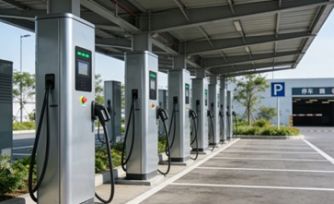
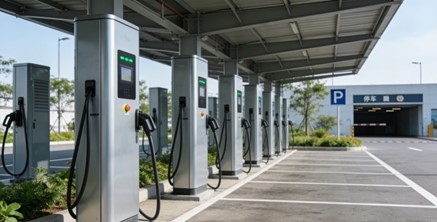
In recent days, high-voltage direct-grid-connected “ultra-fast charging” technologies have been deployed one after another. With a revolutionary design that allows direct connection to 10 kV / 35 kV medium-voltage grids and eliminates the need for traditional bulky transformers, this approach is rapidly becoming a mainstream pathway to achieve ultra-fast charging. By directly delivering DC output voltages of up to 800 V or even 1,000 V, it compresses electric vehicle charging time to the “minute level.”
As the global electric vehicle industry enters a phase of rapid growth, charging infrastructure is undergoing a profound “power revolution.” Accordingly, R&D and production testing equipment are facing new challenges that demand higher power capability, greater precision, and enhanced reliability.
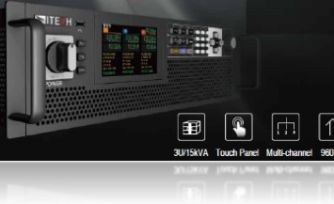
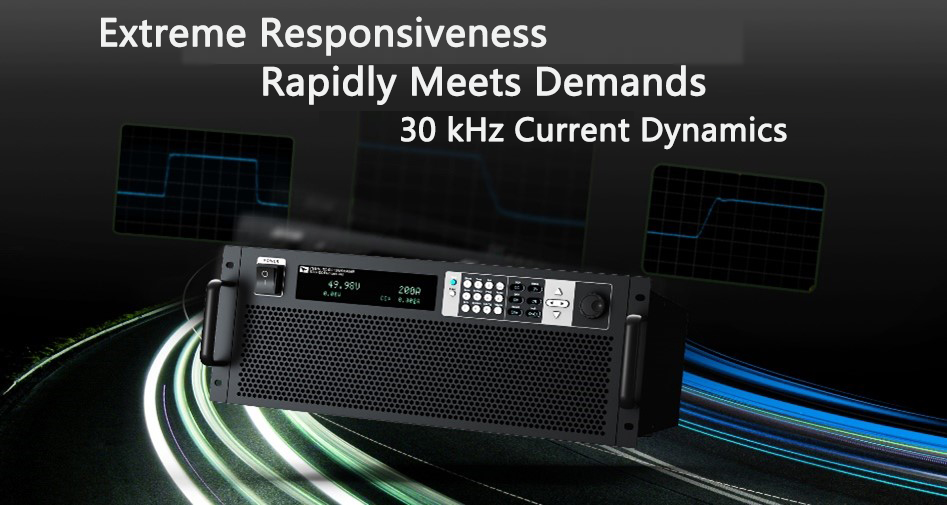
As a high-performance programmable DC electronic load, the IT8900G/L Series is specifically designed to meet the stringent testing requirements of next-generation ultra-fast charging stations and high-power power supplies. Featuring innovative intelligent composite operating modes and powerful parallel expansion capability, it provides engineers with an efficient, precise, and cost-effective one-stop testing solution.
Challenge 1: Inrush overcurrent during high-voltage power-up — how to avoid false protection trips that interrupt testing?
When testing high-voltage charging stations, engineers often face a critical challenge. In traditional CV mode, in order to rapidly reach the target voltage (such as 700 V or 1,000 V), the load draws a large current instantaneously. This prolonged current inrush can easily trigger the overcurrent protection of the charging station, causing the test to fail to start or to be unexpectedly interrupted, significantly impacting R&D validation and production throughput.
Innovative Solution of the IT8900G/L Series: Intelligent CV+CC Composite Mode
The CV+CC composite operating mode of the IT8900G/L Series effectively resolves this conflict. Engineers can predefine a current upper limit and keep it below the overcurrent protection threshold of the charging station. In this mode, the load responds rapidly to voltage changes while ensuring that inrush current always remains within a safe range. This fundamentally eliminates the risk of false protection trips caused by the test equipment, ensuring a smooth and uninterrupted testing process.
Challenge 2: How can testing equipment scale flexibly and reduce costs in the face of ever-increasing charging power?
With 120 kW, 160 kW, 240 kW, and even higher-power charging stations becoming increasingly common, testing laboratories face tremendous pressure on equipment investment. Customers often have to purchase single high-power loads for each power level, resulting in low equipment utilization and high capital expenditure.
Disruptive Advantage of the IT8900G/L Series: Master-Slave Parallel for Power Scalability up to 600 kW
The IT8900G/L Series completely overcomes this limitation with its master-slave parallel capability. Multiple units can be flexibly connected in parallel according to testing power requirements, allowing the system’s total power to scale up to 600 kW. Current-sharing technology ensures that each unit in the parallel system precisely shares the load, fully eliminating the risk of over-power caused by a single unit being overloaded.
This means customers no longer need to invest heavily in a single “giant” load to test ultra-high-power products. With IT8900G/L parallel combinations, laboratories can easily handle both current and future high-power testing requirements, significantly enhancing equipment investment flexibility and value while reducing R&D and production costs.
Beyond this advantage, the IT8900G/L Series high-speed, high-power DC electronic loads also feature rapid current rise and fall rates, low-voltage loading capability, and a high power density of up to 4U/6 kW. With up to 8 operating modes, they support dynamic testing, OCP/OPP function testing, automated testing, and battery testing. This makes them suitable not only for testing in the new energy vehicle and renewable energy sectors, but also widely applicable in automotive electronics, motor drives, battery management systems, and power device testing scenarios.