
Semiconductor
-
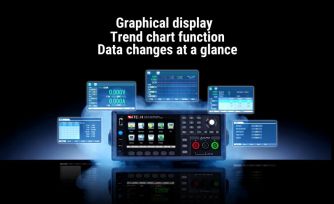
In-Depth Analysis of HTRB Testing for SiC Devices: How the IT-N6700 Wide-Range Programmable DC Power Supply Addresses Challenges in High-Voltage Testing
Read moreWith the rapid development of core industries such as AI data centers, photovoltaic energy storage, and rail transportation, the voltage withstand and efficiency requirements of SiC (Silicon Carbide) devices continue to rise. The voltage rating of SiC devices has gradually increased from the traditional 650 V to 1200 V, and is even moving toward the high-end 1700 V range. Correspondingly, the reliability test voltages for SiC devices are also being raised, creating an urgent market demand for high-voltage precision DC power supplies—a critical technological breakthrough driving the advancement of the SiC industry.
-
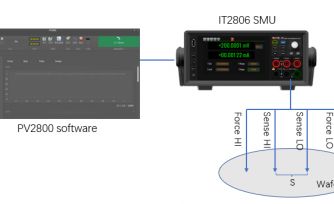
How to test the surface resistivity of semiconductor materials
Read moreMany important parameters of electronic devices are closely related to the resistivity and the uniformity of its distribution, such as the reverse saturation current of the diode, the saturation voltage drop of the transistor and the magnification β, etc., which are directly related to the resistivity of silicon single crystal. Therefore, the resistivity test of devices has become an important process in chip processing, and its uniformity control and accurate measurement are directly related to whether power devices with better performance can be manufactured in the future.
-
SEMI F47 Test in Semiconductor Industry —How does IT7800 edit the voltage transient drop waveform easily
Read moreBackground Semiconductor manufacturers have extremely high requirements on power supply, in particular the wafer related industry with higher requirements on power supply quality. Once voltage transient drop occurs, it will not only cause unexpected damage to sensitive microcomputer automatic control devices but also interrupt the process and cause great losses. To protect sensitive devices from voltage transient drop damage, the SEMI F47 standard stipulates the tolerance level of the semiconductor processing equipment on voltage transient drop, and requires that the semiconductor processing equipment should be immune to voltage transient drop in the AC power grid.