
-
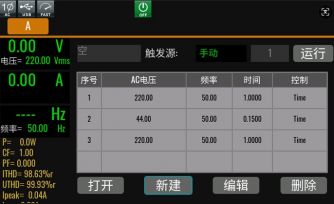
In-Depth Analysis of Grid-Connected Inverter Testing with the IT7900E Grid Simulator
Read moreIntroduction: In renewable energy grid-connected systems, the grid-tied inverter serves as the critical interface between distributed energy sources and the public power grid. Its behavior not only affects power generation efficiency, but also directly impacts the safety and stability of the grid. As a result, international standards impose extremely stringent requirements on inverter grid adaptability, protection response speed, and power quality.
-
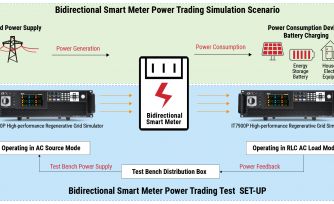
Bidirectional Smart Meter Testing Implemented with the IT7900P High-Performance Grid Simulator
Read moreAt present, the imbalance between global energy supply and demand has become increasingly pronounced, while mounting environmental protection pressures have created an urgent need to promote renewable energy generation and to strengthen power management. With the continuous expansion of renewable power generation, its impact on grid architecture, power quality, and operational stability has grown significantly.
-
How to Test Battery Efficiency
Read moreIn applications such as renewable energy, energy storage systems, electric vehicles, and consumer electronics, battery efficiency is one of the key indicators used to evaluate battery performance.
-
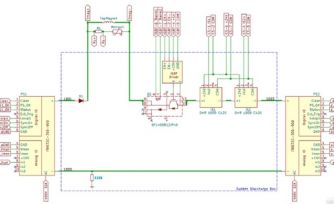
Application of bidirectional DC power supply in bidirectional current testing of IGBT modules
Read moreWith the widespread application of power electronic devices—especially IGBT modules—in fields such as new energy and industrial drives, the requirements for performance and reliability testing have become increasingly stringent. In particular, when simulating real-world operating conditions, it is often necessary to apply a bidirectional alternating current to the IGBT module to verify its conduction, cutoff, and current-handling capabilities.
-
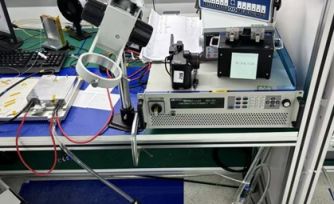
The Application of ITECH IT6000C Power Supply in the Fiber Laser Industry
Read moreWith the widespread application of semiconductor lasers in fields such as industrial processing, medical equipment, and optical fiber communications, the performance testing requirements for their core component—the fiber laser—have become increasingly demanding. Fiber lasers, known for their lightweight design, high power output, and excellent stability, offer distinct advantages over semiconductor and solid-state lasers.
-
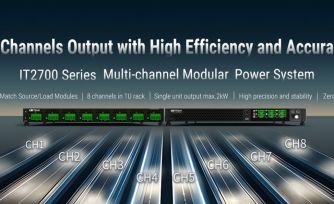
Testing Energy Storage BMS: Multi-channel Solution for Efficient Simulation of Cells
Read moreIn energy storage systems, the testing and validation of the battery management system (BMS) is a crucial part. To ensure that the BMS can accurately collect voltage and current information and respond correctly under various complex battery states, it becomes especially important to simulate the behavior of the cells and packs. The IT2700 Multi-channel Modular Power System, with its powerful multi-channel serial and parallel capabilities, provides an ideal solution for energy storage BMS testing.